




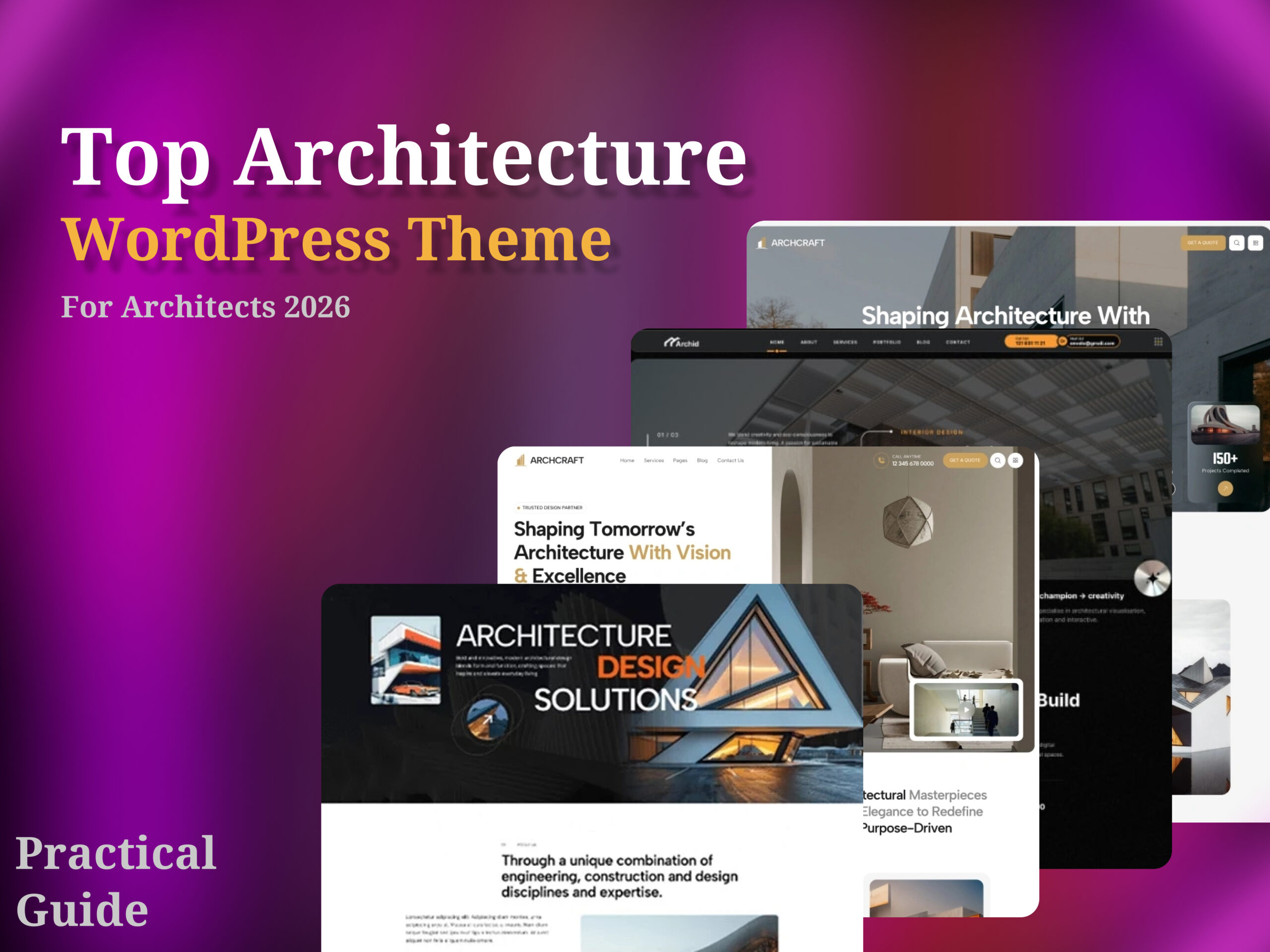
Architecture WordPress Theme – Overview of Design, Features, and Benefits
People who look for an architecture WordPress theme usually want more than just a design file. They are looking for who they are. A way to show off buildings, spaces, and ideas that can take months or even years to come to life. In that way, picking the right one click demo import architecture website theme is less about looks and more about how well it communicates, how trustworthy it is, and how easy it is to use.
A good WordPress theme for architecture shouldn’t feel like a template. It should feel like a quiet extension of an architect’s thought process—planned, exact, and with a clear visual goal. This article looks at a few of ThemeXriver’s premium products, focusing on how each architecture WordPress theme can help with real-world branding, portfolio presentation, and getting clients to buy.
We will also look at how each architecture website template WordPress performs, how flexible its layout is, and how well it adheres to Google’s EEAT (Experience, Expertise, Authoritativeness, Trustworthiness) principles, which are becoming increasingly important to search engines.
Understanding What an Architecture WordPress Theme Actually Does
An architecture WordPress theme gives you pre-made layouts for showing off your projects, services, and company identity. But in real life, it does more than that.
A good architect website template usually does three main things:
- Visual storytelling – presenting projects in a way that feels intentional, not random
- Information hierarchy – organizing services, portfolios, and case studies clearly
- User trust signaling – creating a sense of professionalism through design consistency
In a lot of real-life situations, architecture firms don’t realize how much a website affects how much clients trust them. A good architecture WordPress theme can give the impression of stability and experience even before a conversation starts.
Best Architecture WordPress Themes for Architects & Designers (2026)
People will see your work online differently depending on which architecture WordPress theme you choose. When it comes to architecture and interior design, how something looks can be just as important as the project itself. A good template for an architect’s website helps you organize your portfolio clearly and show off your designs in a professional way. Some interior design website templates are more minimal, while others are more bold or have a lot of visuals.
In the end, a template for a construction website is just a way to show off your work better, build trust, and make it easier for people to understand what you do.
Archcraft – Modern Minimal Interior & Architecture WordPress Theme
Archcraft feels like a calm, editorial-style approach to a architecture WordPress theme. It avoids unnecessary visual noise and instead relies on spacing, typography, and large-scale imagery. For architecture studios that prefer a clean portfolio structure, this design suggests discipline. It looks like it would be great for boutique firms and interior designers where telling stories through pictures is more important than technical explanations.
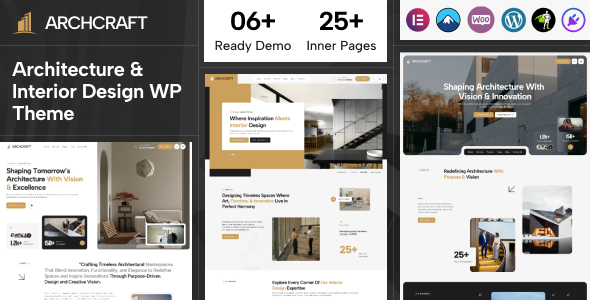
This architecture WordPress theme, on the other hand, doesn’t try to get too much attention. Instead, it puts the work in a way that makes it look like it’s in a gallery. That restraint can actually make people trust you more, especially high-end clients who like things to be clear instead of flashy.
Barsi – Creative Architecture & Interior Design WordPress Theme
Barsi takes a more expressive direction. It feels more lively and a little experimental in how it is laid out than a typical architecture WordPress theme. This kind of presentation is good for interior design firms because it gives their portfolios more personality. The grid system is flexible, and project showcases look like they are staged instead of just being listed.

There is a small risk here: if content isn’t carefully chosen, the boldness of the visuals could take away from the message. As a modern architecture portfolio WordPress theme, it strikes a good balance between usability and creativity.
Arktec – Professional Architecture & Construction WordPress Theme
Arktec feels more engineering-driven in its approach. It represents a architecture WordPress theme that prioritizes structure, hierarchy, and clarity.
This makes it particularly useful for architecture firms that handle construction planning, urban development, or technical visualization projects. The layout is systematic, and navigation feels predictable—in a good way.

From a usability perspective, this architecture portfolio WordPress theme reduces friction. Visitors can quickly move from services to projects without confusion, which improves engagement and perceived professionalism.
It subtly communicates something important: control and precision.
Adsett – Corporate Architecture & Interior Design WordPress Theme
Adsett feels more corporate in tone compared to many other options in this space. This architecture WordPress theme leans toward business communication rather than artistic experimentation.
It works well for large architecture firms, consultancy agencies, or companies dealing with commercial real estate projects. The structure prioritizes service clarity and conversion-focused layout.
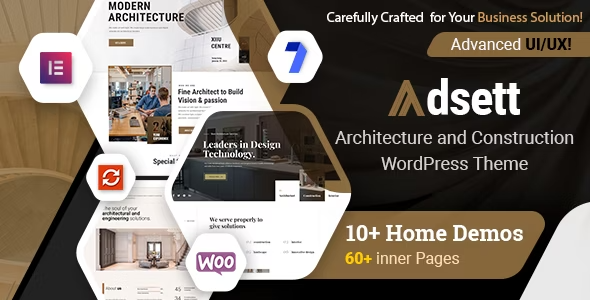
Unlike more artistic templates, this one seems designed for trust-building. The navigation is straightforward, and information hierarchy is well-organized. In many cases, that simplicity becomes a strength rather than a limitation.
Archix – Portfolio-Focused Architecture & Interior WordPress Theme
Archix focuses heavily on visual storytelling. This architecture WordPress theme treats each project like a curated experience rather than a static entry.
Scrolling feels smooth and immersive, which makes it ideal for studios that rely on strong imagery or conceptual architecture work. It encourages exploration instead of quick scanning.
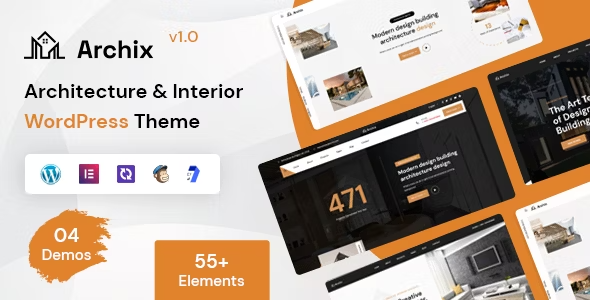
However, this kind of design requires discipline. Without well-prepared visuals, even a strong architecture portfolio WordPress theme like Archix may feel overwhelming. But when executed properly, it creates a memorable user experience.
Archio – Clean and Modern Architecture & Interior WordPress Theme
Archio sits in a balanced middle ground. It is not too simple or too expressive. Instead, it serves as a stable best theme for an architecture firm website that puts consistency and usability first.
This makes it a good choice for companies that want a modern look that isn’t too flashy. The layout lets you show off your work and explain what you do without making the page look messy.
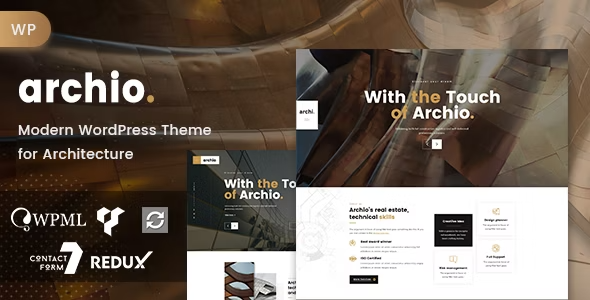
It has a quiet strength because it is consistent. The pages all seem to go together, and the way the site is set up makes it easy to look around for a long time without getting bored. For many agencies, that stability is more important than how hard it looks.
Architecture – Flexible Multipurpose Architecture WordPress Theme
This WordPress theme for general use is more like a flexible framework than a set design system. Depending on the needs of the architecture business, it can be shaped in different ways.
Its strength is in how adaptable it is. This architecture portfolio WordPress theme can be changed to fit different branding styles, whether your business is a small studio or a big agency.
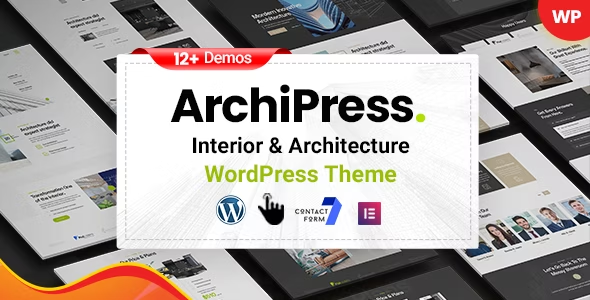
But to be flexible, you need to know where you’re going. If you don’t make careful design choices, the end result may seem generic. But with the right changes, it can be a strong foundation for a unique architectural style.